



Electricity quietly keeps industrial facilities running. Motors drive conveyors, pumps move fluids through systems, and control panels coordinate entire production lines. When everything works as it should, most people hardly think about the electrical side of things.
But when something goes wrong, the impact is immediate. Machines stop. Production slows down. Maintenance teams start tracing circuits and checking panels to find the source of the issue.
The reality is that many faults seen across factories and processing plants are familiar ones. These common electrical problems in industries appear regularly, especially in busy facilities where equipment runs long hours.
The key is identifying the issue early. With proper industrial electrical fault finding, many faults can be resolved quickly before they lead to extended downtime.
Here are ten industrial electrical faults that maintenance teams often encounter, along with simple ways to address them.
1. Motor Overheating
Electric motors are everywhere in industrial environments. They power pumps, conveyors, compressors, and mixing equipment.
Because they work constantly, overheating is one of the most common industrial electrical faults technicians deal with.
This usually happens when:
- the motor is overloaded
- ventilation around the motor is poor
- voltage becomes unbalanced
- bearings begin to wear
Operators may notice hot motor casings or machines shutting down unexpectedly. Checking load conditions and airflow can often prevent the problem from getting worse. If damage has already begun, servicing through motor repairs can help restore the equipment.
Catching these issues early makes troubleshooting industrial electrical problems far easier.
2. Loose Electrical Connections
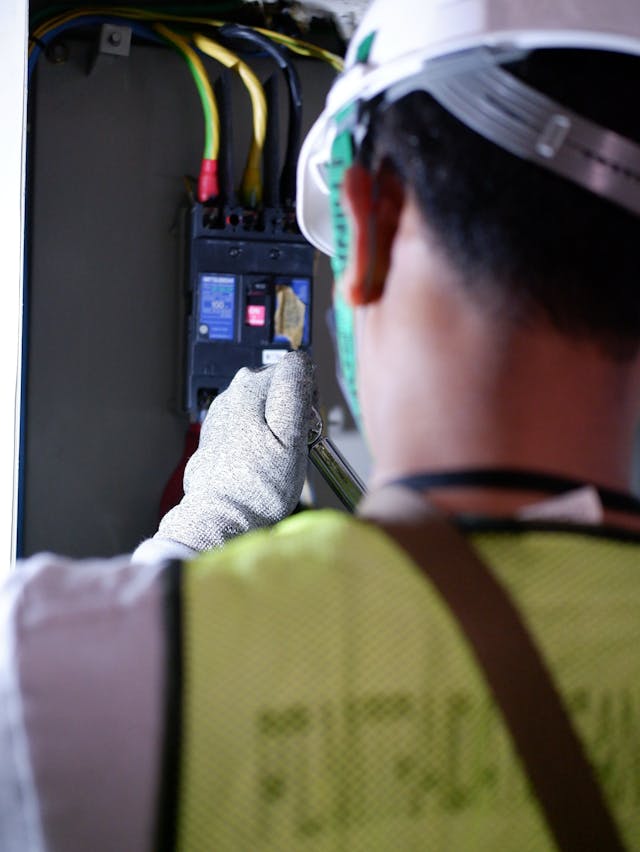
Loose connections are more common than many people realise. Industrial machines vibrate constantly, and that vibration can gradually loosen terminals inside panels.
Once a connection becomes loose, resistance increases and heat begins to build.
This can lead to several electrical problems, including controls drop-outs, overheating cabling, or machines stopping unexpectedly.
Regular inspections help prevent these electrical problems from escalating. Many facilities schedule routine checks through experienced electrical services technicians.
3. Voltage Fluctuations
Industrial equipment expects a stable voltage. When voltage fluctuates too much, machines can start behaving unpredictably.
Sometimes the issue comes from the external power supply. Other times it happens when large motors start up within the facility.
Operators might notice machines tripping or failing to start properly. During electrical fault-finding industrial investigations, technicians can test and monitor voltage levels to locate unstable supply points.
4. Circuit Breakers That Keep Tripping
Circuit breakers protect electrical systems by cutting power when something goes wrong.
If a breaker trips repeatedly, it usually means there is a deeper issue.
Frequent tripping can be caused by:
- overloaded circuits
- short circuits
- insulation damage
- faulty equipment
These situations often point to underlying industrial electrical faults that require investigation. Maintenance teams usually begin industrial electrical fault finding by checking circuit loads and inspecting wiring.
Where safety risks are present, BRE specialists performing safety services may also be involved.
5. Cable Insulation Breakdown
Industrial environments are tough on electrical cables. Heat, vibration, and exposure to chemicals gradually weaken insulation.
Once insulation starts to break down, conductors may become exposed. This increases the risk of short circuits and arc faults.
Technicians may notice cracked insulation, repeated breaker trips, or unexplained equipment shutdowns.
Regular inspections help detect these common electrical problems in industries before they cause serious failures.
6. Sensor and Automation Faults
Modern facilities rely heavily on automation systems. Sensors monitor pressure, temperature, and movement throughout the production line.
When a sensor fails, the issue can sometimes appear as an electrical fault even though the problem lies within the control system.
Machines may stop suddenly or display incorrect readings.
During electrical fault finding industrial checks, technicians inspect wiring, signals, and sensor power supplies to locate the cause.
For more complicated automation issues, facilities often turn to specialists such as BRE Services.
7. Ground Faults
Ground faults occur when electrical current travels through an unintended path.
This often happens when insulation becomes damaged or moisture enters electrical equipment.
Ground faults can cause breaker trips, equipment shutdowns, and potential shock hazards. Because of the safety risks, detecting them requires specialised testing during industrial electrical fault finding.
These types of electrical problems should always be treated seriously.
8. Contactor and Relay Wear
Contactors and relays switch power to motors and heavy equipment. In busy industrial environments, these components operate thousands of times each day.
Over time, the contacts wear out or burn.
Operators may notice motors failing to start, machines stopping unexpectedly, or unusual clicking noises from control panels.
Routine inspection and replacement help prevent these industrial electrical faults from disrupting production.
9. Overloaded Circuits
Facilities often expand over time, with new equipment added to existing electrical systems.
If the system isn’t upgraded accordingly, circuits can become overloaded.
This can lead to overheated cables, frequent breaker trips, and reduced equipment performance.
When troubleshooting industrial electrical problems, technicians usually measure circuit loads and adjust distribution where necessary. Many sites also conduct plant risk assessment programs to identify potential hazards early.
10. Lack of Preventive Maintenance
Sometimes, electrical faults occur simply because maintenance has been overlooked.
Dust buildup, aging components, and loose wiring gradually increase the likelihood of system failures.
Preventive maintenance helps teams spot early electrical problems, reduce downtime, and extend equipment life.
Experienced technicians often perform detailed electrical fault finding across multiple systems to keep facilities operating smoothly.
Keeping Industrial Electrical Systems Reliable
Electrical systems support nearly every operation inside an industrial facility. When they fail, the disruption can be immediate.
Fortunately, many common electrical problems in industries can be identified early through regular inspections and proper industrial electrical fault finding.
If your facility is dealing with persistent electrical problems or recurring industrial electrical faults, experienced technicians can help identify the cause and restore reliable operation.
You can explore available electrical services or contact us to discuss your facility’s needs.
